Audit Engine: October 2026 Product Update
Explore the latest upgrades to Sherlock Audit Engine: Self-serve reviews, frontier model access, and expanded review controls.
October 2026 · Product update
Protocol code changes between major security reviews. Updates to permissions, accounting, or withdrawal logic need focused analysis with the surrounding system in context. The October update gives teams more control over review scope and execution, with findings that are easier to assess and move into development.
Audit Engine coordinates multiple AI auditors and models, then validates, clusters, and deduplicates their findings. Teams specify the code and supporting context, select an auditor lineup, and work through the results in one workspace.
This release adds:
- Review execution: self-serve configuration and launch, PR scopes, and automatic compute budgets per model.
- Models and assessment: updated preset models, protocol trust assumptions, and engagement history for AI judging.
- Pricing and findings: preset bundle discounts, Markdown exports, and stable finding numbers after merges.
Configure and launch self-serve reviews
Self-serve brings review setup and execution directly into Audit Engine:
- Set the scope. Select the repository and code to review, or choose a pull request.
- Configure the lineup. Add supporting context and select a preset or custom set of auditors.
- Quote and launch. Check the credit cost, start the run, and track progress in the platform.
Projects group related repositories and engagements. The Issues view consolidates findings across reviews, so teams can inspect review history and launch another engagement against updated code within the same project.
Scope PR reviews to changed code
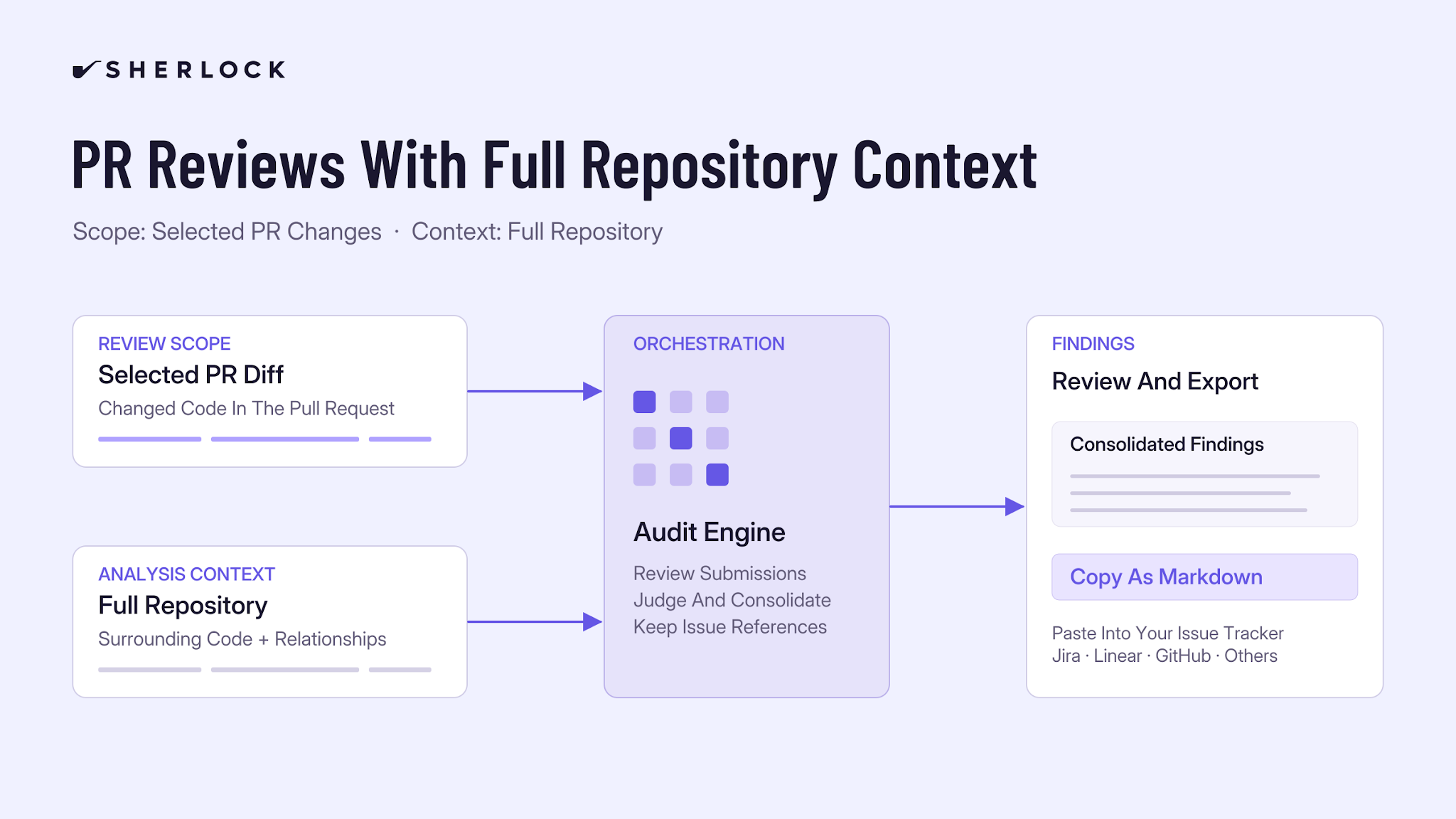
A small diff can affect behavior across contracts. PR reviews let teams target that change while retaining the code needed to interpret it.
Select a pull request, and its diff defines the review scope. The full repository remains available as context, including dependencies outside the diff. Teams can focus a review on changes to permissions, accounting, or fund flows without selecting the entire repository as scope.
PR pricing accounts for the changed-code scope plus PR review overhead. The credit quote reflects the selected scope and lineup.
Changed code defines the scope. The repository supplies context.
Inspect lineups and size compute automatically
The lineup step now shows the auditors in each Light, Standard, and Deep preset. Teams can inspect the preset or customize its auditors before launch.
Audit Engine assigns a separate compute budget to each model, sized to the selected code. This replaces manual budget-tier selection, so teams configure scope and lineup while the platform handles model-specific compute allocation.
New models and frontier access
Every Light, Standard, and Deep preset now includes Sherlock-optimized GPT-6 Sol and GPT-5.6 Sol.
Sherlock also has access to access to restricted models from frontier labs through restricted-access programs. Approvals for customer-facing product use remain pending, so this release does not announce either model in Audit Engine lineups.
Evaluate findings with protocol context
Finding assessment now incorporates more of the protocol’s intended behavior and review history.
Apply the protocol’s trust assumptions
The AI judge now applies the protocol’s trust model when evaluating findings. Privileged actions are assessed against the responsibilities assigned to trusted roles, helping distinguish a potential issue from behavior the protocol intentionally permits.
Bring earlier engagements into the assessment
Judges can also access the customer’s earlier engagements. Previously identified issues provide context for recognizing findings the team already knows about.
Save credits with preset bundles
Runs using an unchanged Light, Standard, or Deep preset now receive a bundle discount. Smaller scopes receive larger percentage discounts; deeper presets receive larger discounts at the same scope size. This makes focused, recurring reviews more economical.
Illustrative discounts:
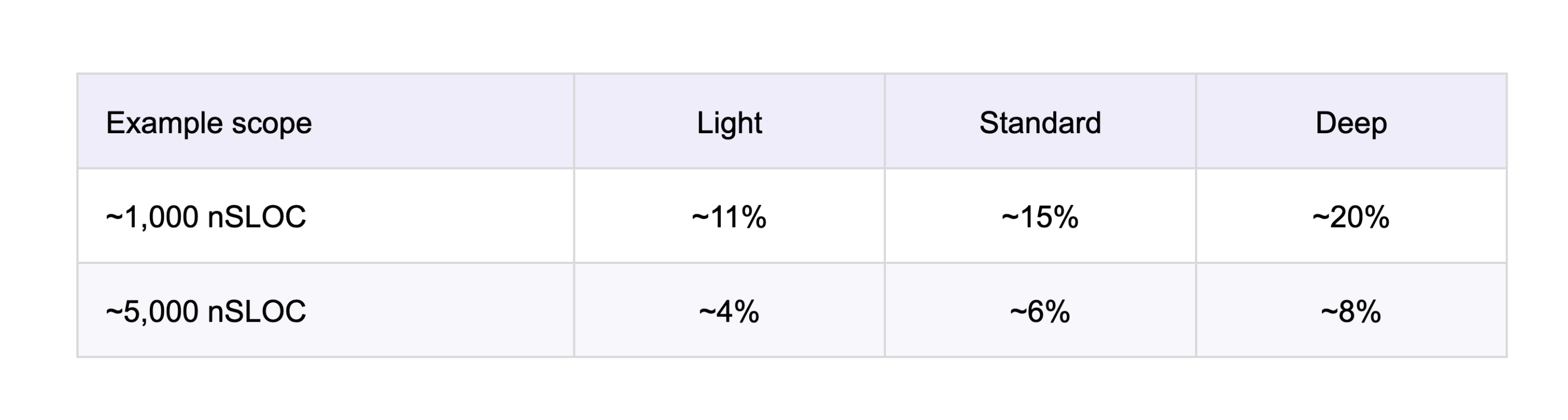
The preset card displays “Save N%” for the selected scope. The final credit quote is visible before launch.
Preset lineups only. Editing a preset or building a custom lineup removes the discount. The discount does not affect model performance.
Carry findings into development work
Copy any finding as Markdown and paste it into Jira, Linear, GitHub, or another development tool to track discussion and remediation.
Finding numbers remain stable when related findings are merged, preserving references as results are consolidated.
Check service status and get support
A help bubble on customer screens attaches the relevant account and run to support requests, giving Sherlock the context needed to investigate.
Check availability on the public Audit Engine status page.
Explore Sherlock Audit Engine or talk to the team about your next review.