IntroducingSherlock AUDIT ENGINE
The orchestration layer for AI-native security review. Frontier LLMs, purpose-built AI auditors, and AI-native security researchers run against your codebase in one coordinated engagement, with every validated finding consolidated into one final audit result.
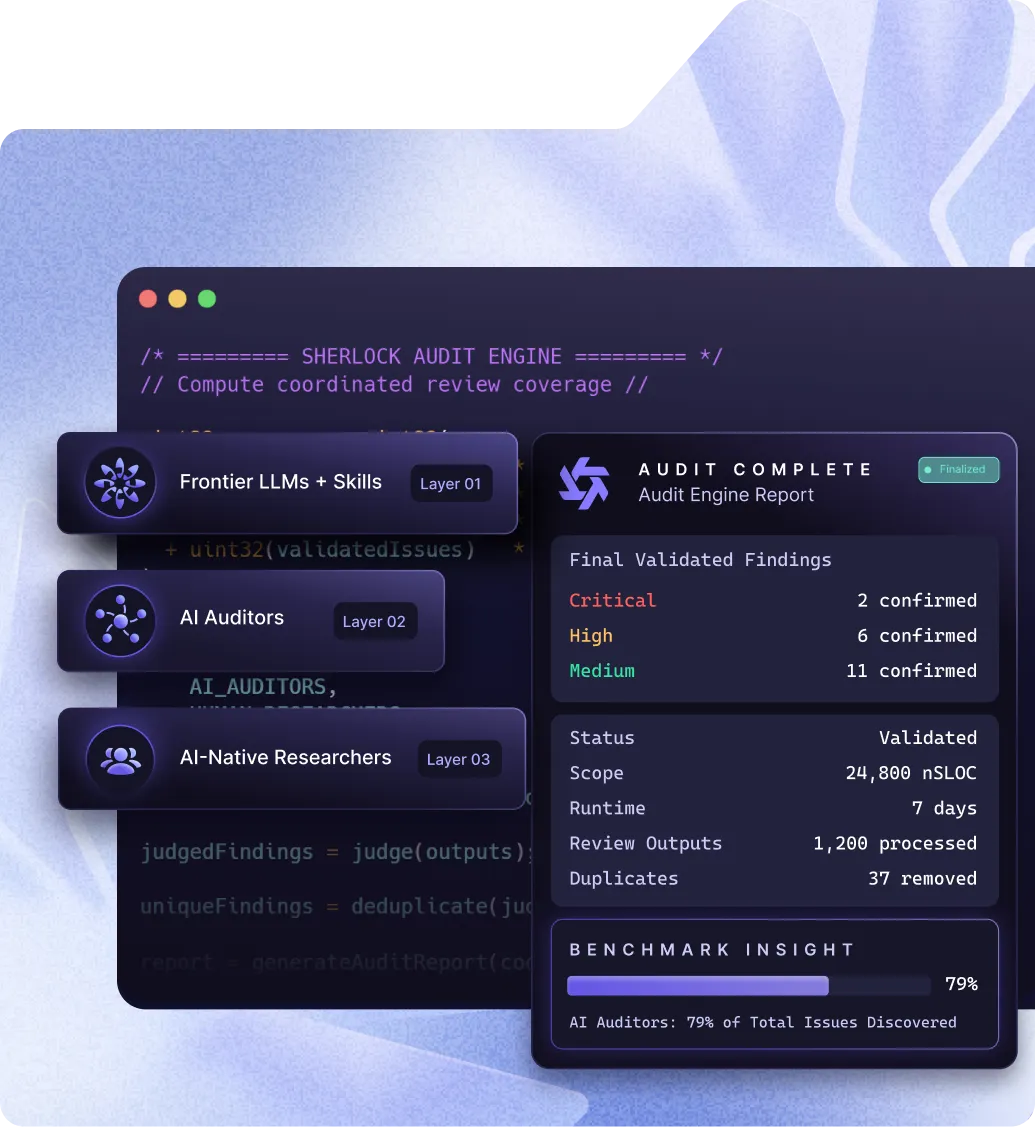










Three Security Layers. One coordinated review.
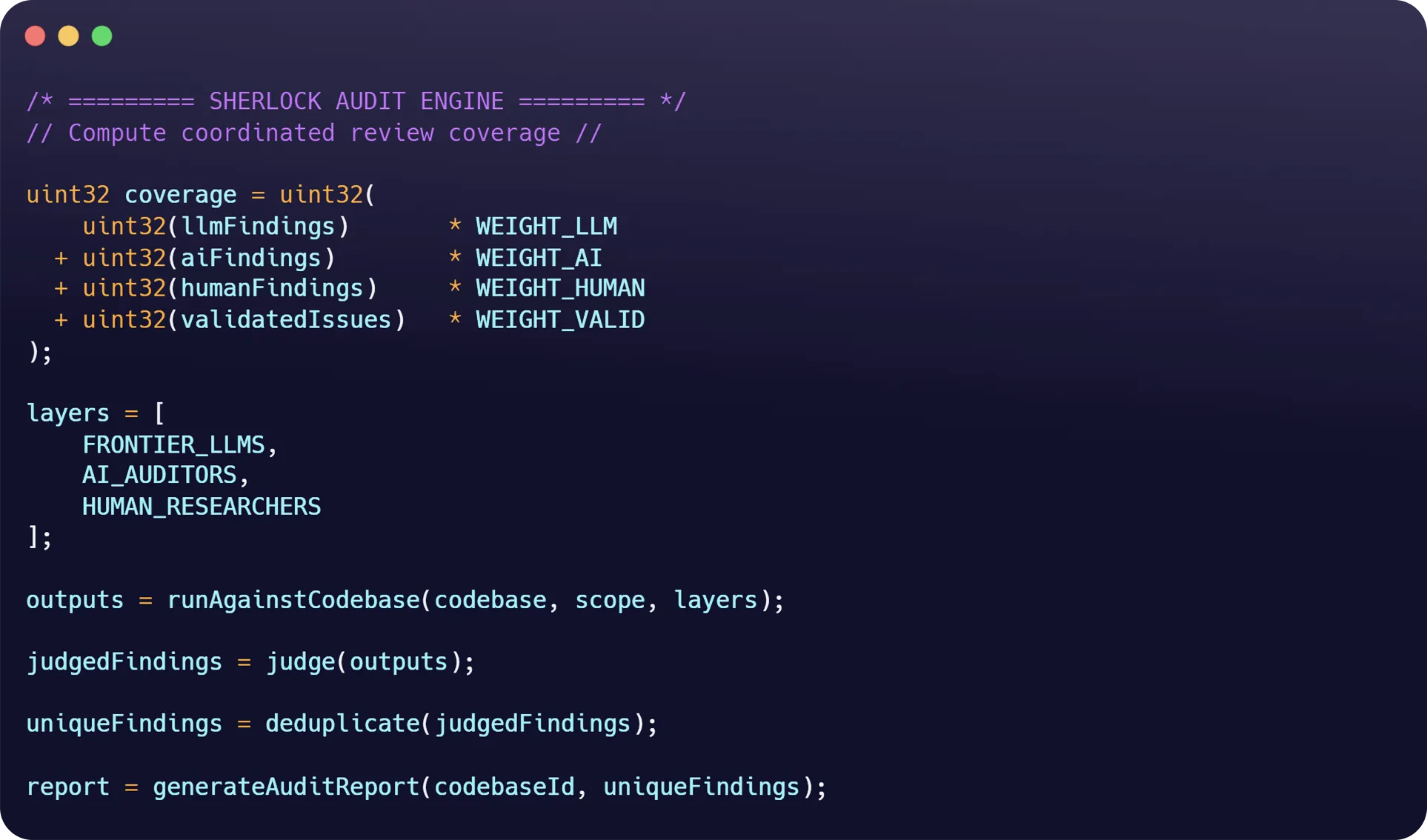
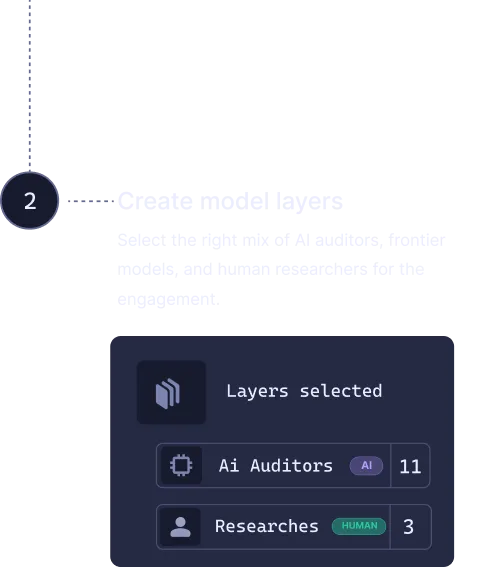
For the first time, frontier LLMs, purpose-built AI auditors, and AI-native security researchers can run against the same codebase in one fixed security review. Audit Engine coordinates each layer into a stronger, faster audit workflow.
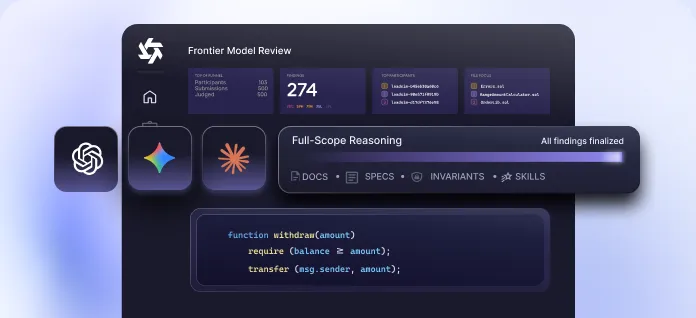
Frontier LLMs+ Skills
Claude, GPT, and Gemini reason through your entire codebase independently, each applying different detection patterns to the same code.
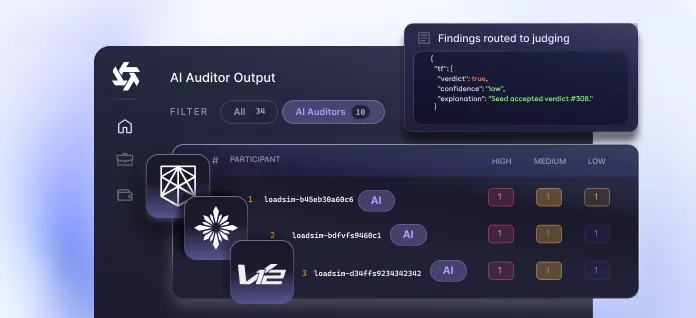
AI Auditors
Security-specific AI solutions combine custom workflows, detection logic, and specialized approaches to analyze distinct vulnerability classes and system behaviors.
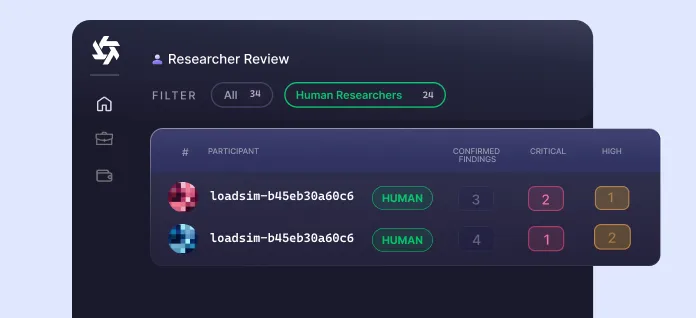
AI-Native Security Researchers
Top-ranked researchers armed with AI tooling hunt for complex logic bugs and protocol-level vulnerabilities no automated tool catches alone.

Audit Engine’s first flagship engagement brought the full model to life: frontier LLMs, AI auditors, and AI-native security researchers reviewing one of Web3’s most important infrastructure upgrades.
reward pool
Findings
auditors
AI Auditing at Full Strength.
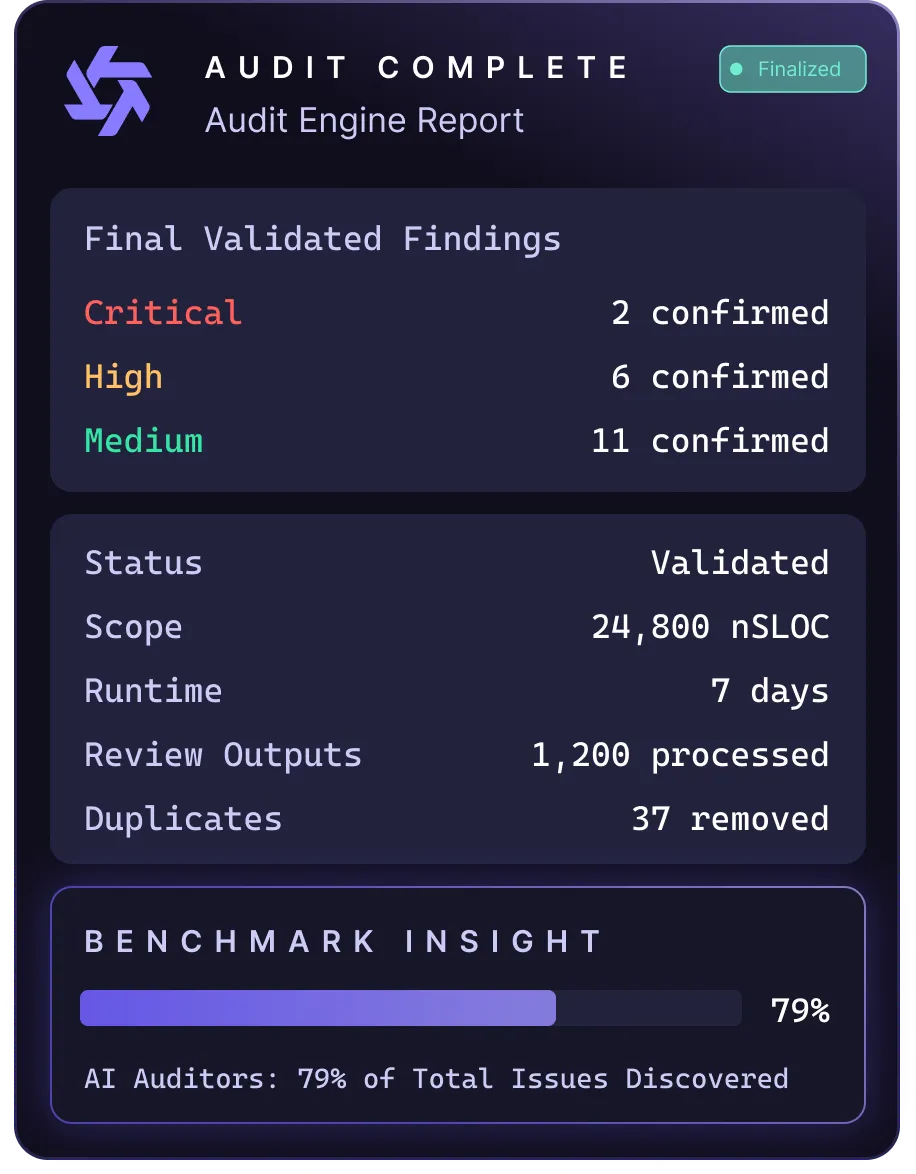
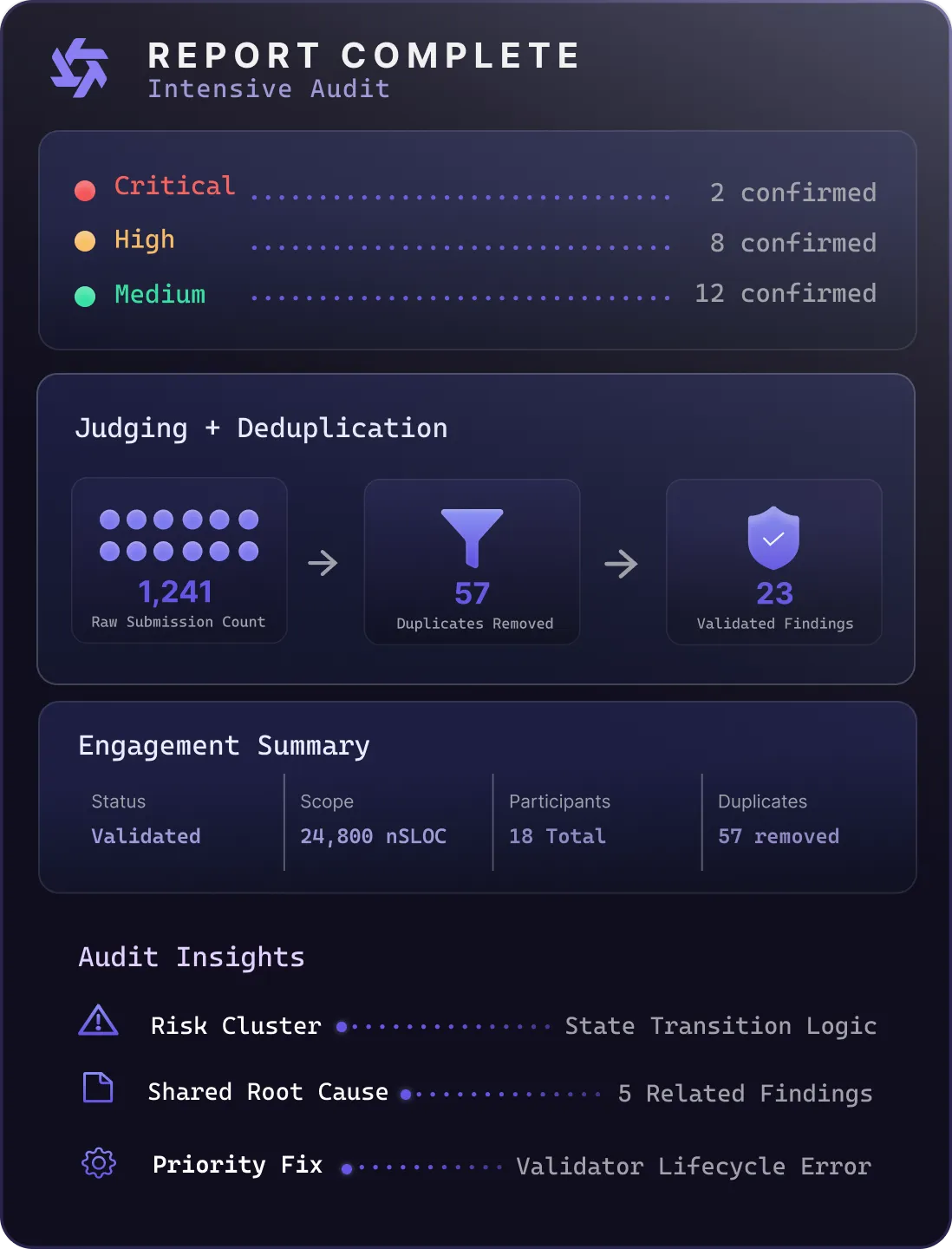
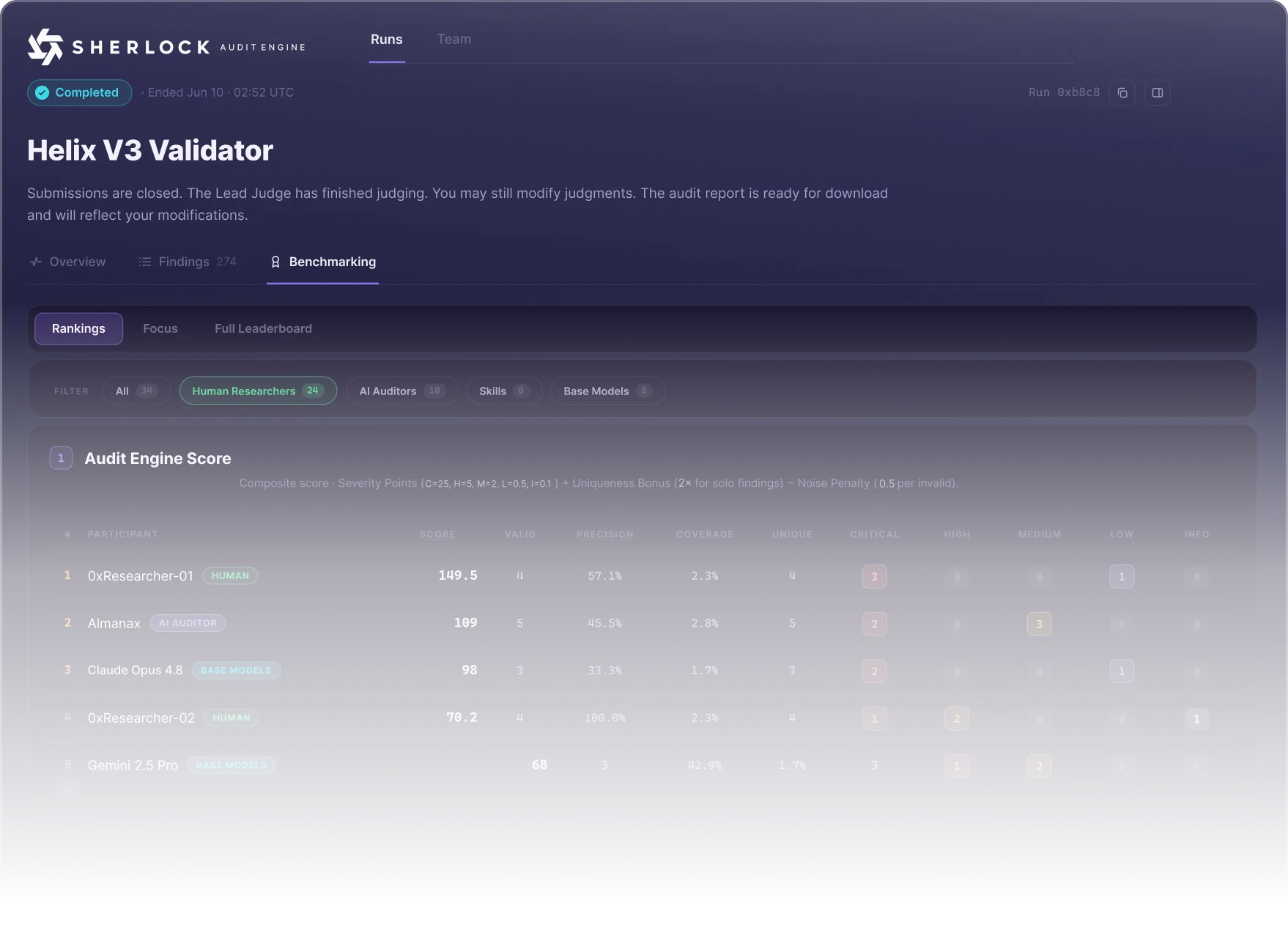
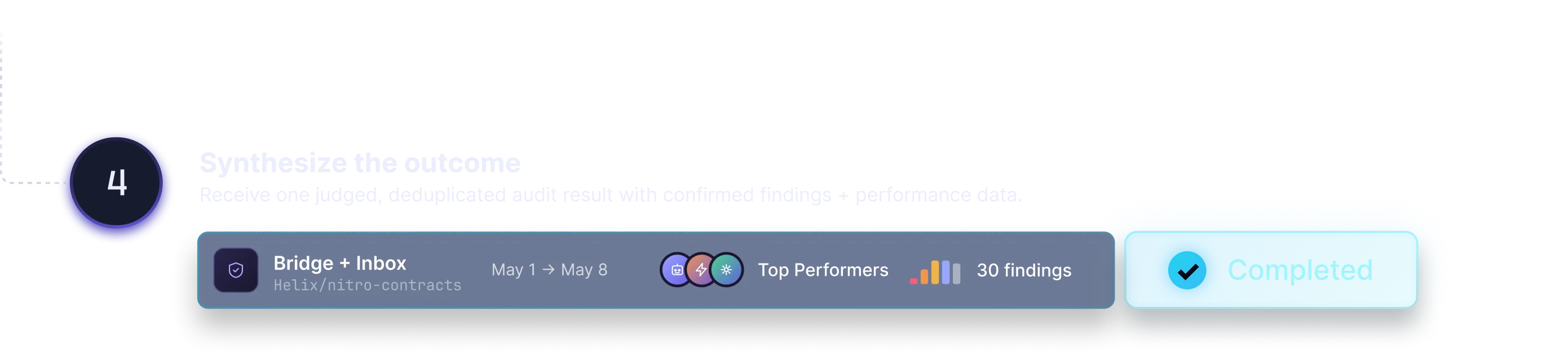
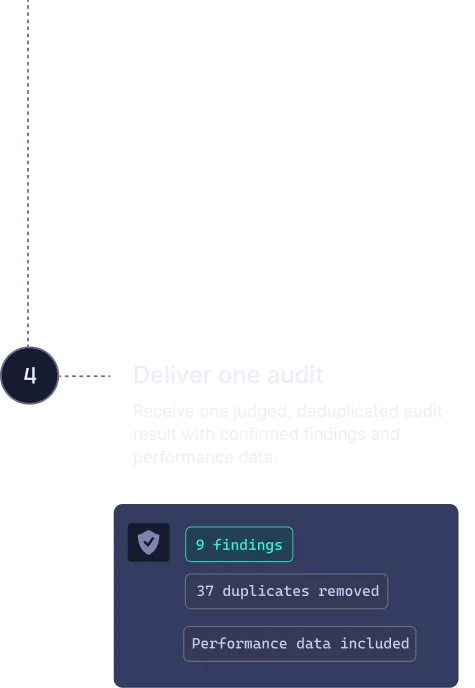
Audit Engine synthesizes findings from every review layer into one premium audit outcome. Issues are validated, deduplicated, and organized for action, with performance data showing which models, AI auditors, and researchers actually found risk.
The full field. One review.
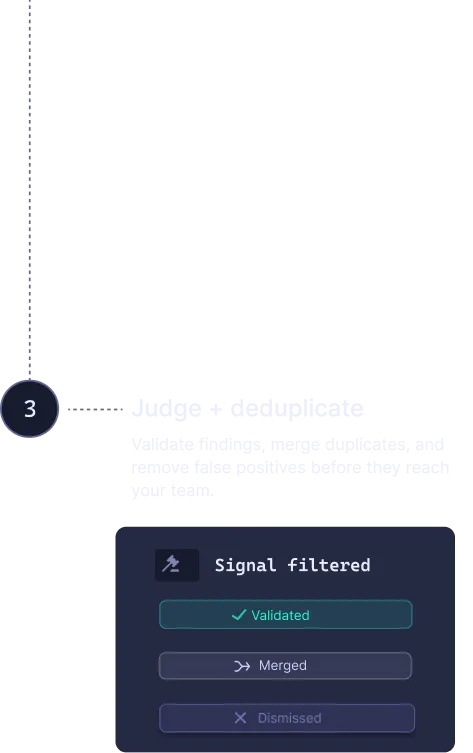
Audit Engine coordinates participants, routes findings through validation, and turns overlapping AI and human output into a clean security read.
Validated findings
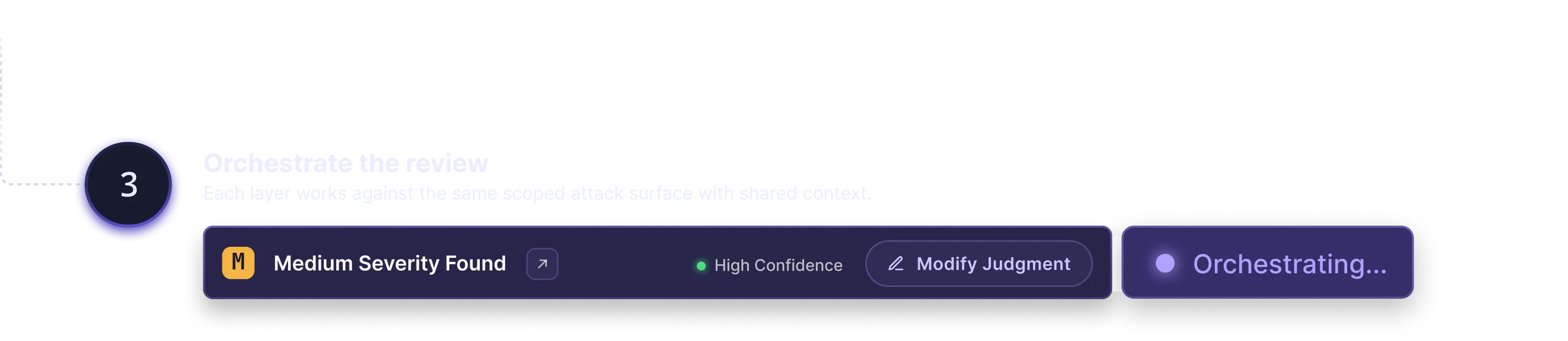
Every issue is reviewed for severity, impact, and exploitability.
Root-cause deduplication
Duplicate signals are collapsed into the strongest version of each underlying issue.
Fix-ready context
Findings include affected code, root cause, and remediation context for engineering teams.

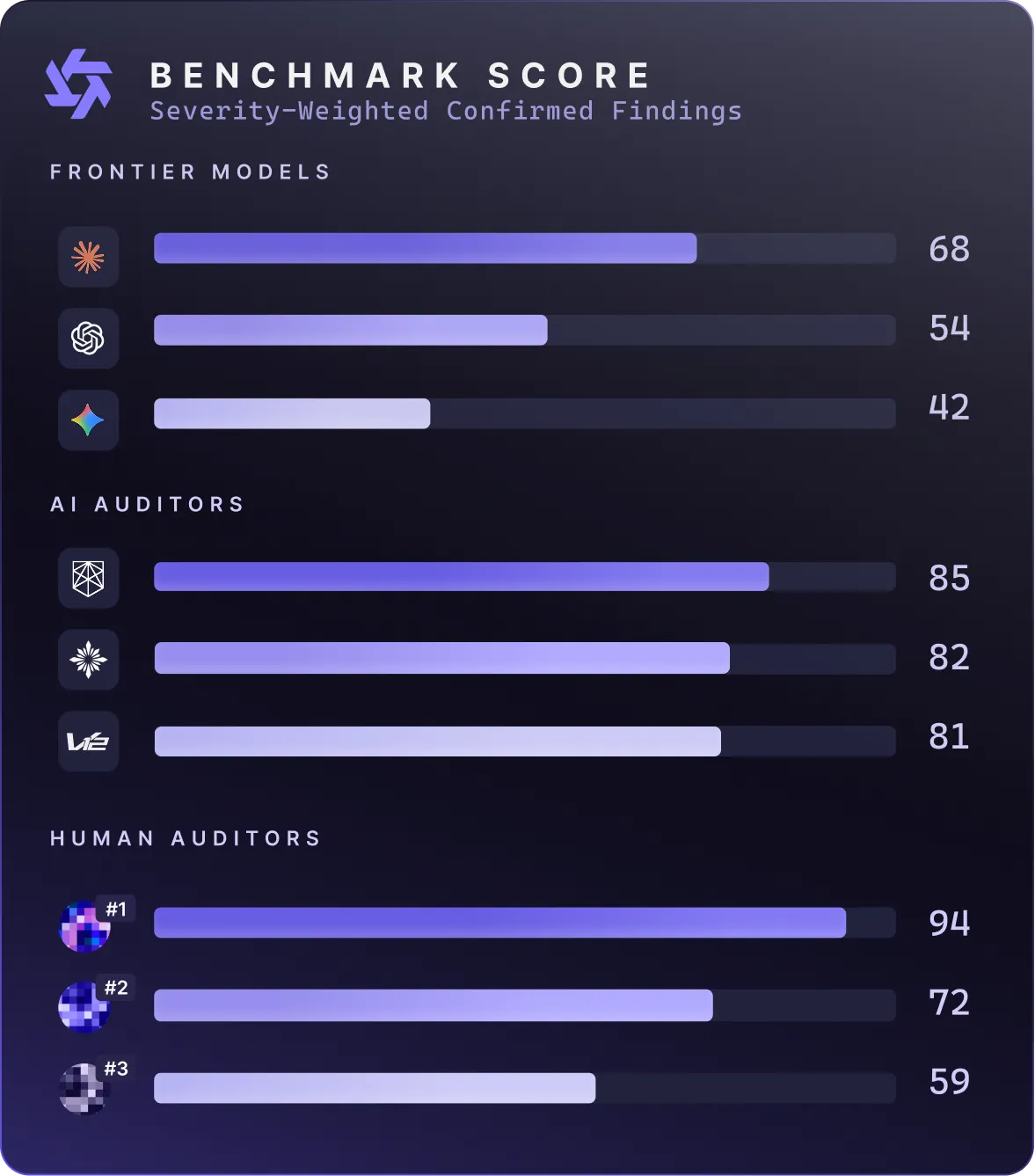

Performance measurement across the stack.
Discover which approaches perform best across the metrics that matter most, including coverage, precision, speed, overlap, and incremental contribution.
Layer-level attribution
Every confirmed finding is tied to the layer, tool, model, or researcher that surfaced it.
Severity-weighted performance
Results are scored by finding quality and severity, not raw volume.
Evidence for future reviews
Teams can see what performed best on their code and use that data to plan the next engagement.
Orchestration Layer for AI-native security review.
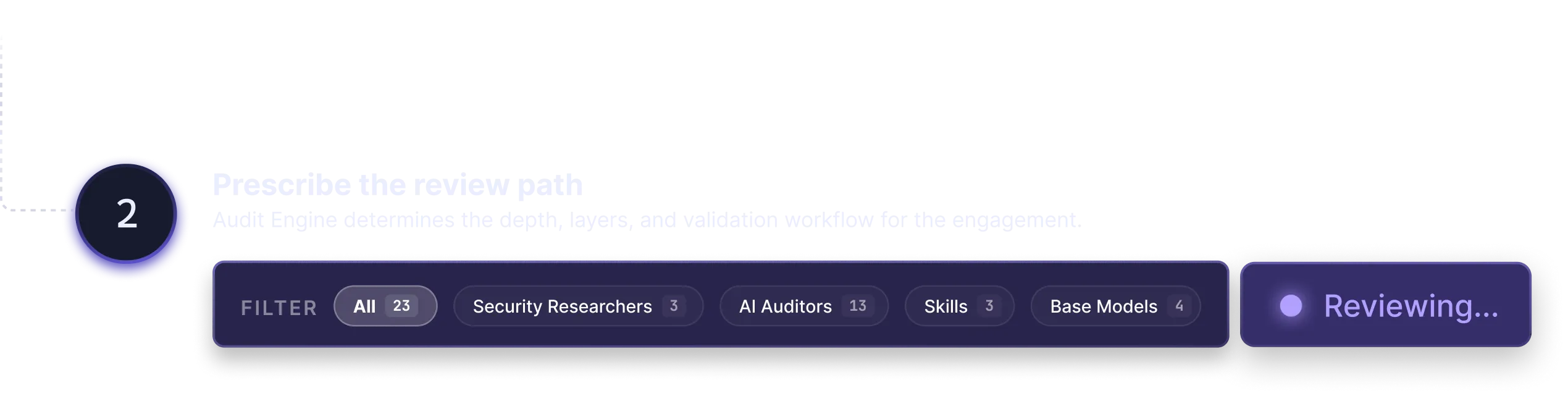
Audit Engine uses proprietary audit data and codebase context to shape each review.The system determines which participants to include, what the review should focus on, how findings are validated, and how the resulting security signal is consolidated into one final outcome.





Scale the depth to match the stakes.
Not every codebase needs the same level of review.
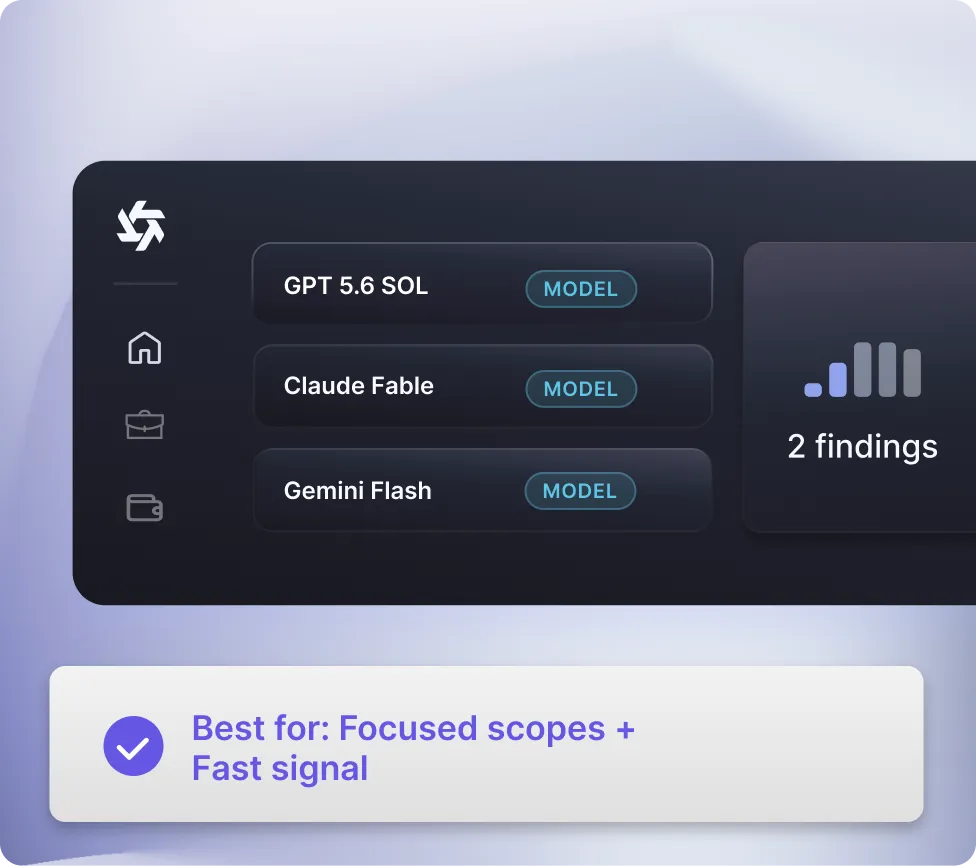
Audit Engine scales from fast AI-led coverage to full-scale AI + human review for critical code.
Fast AI-led coverage for focused scopes, early code, and lower-risk changes.
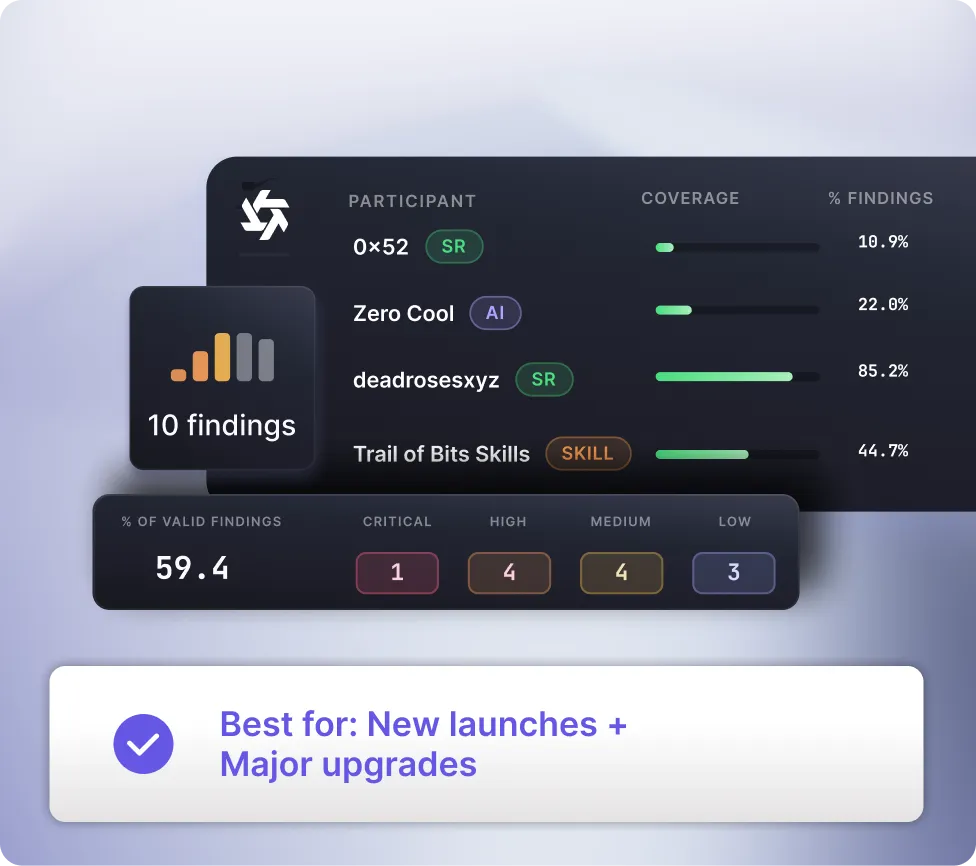
AI coverage with targeted human review for launches, upgrades, and higher-risk code.
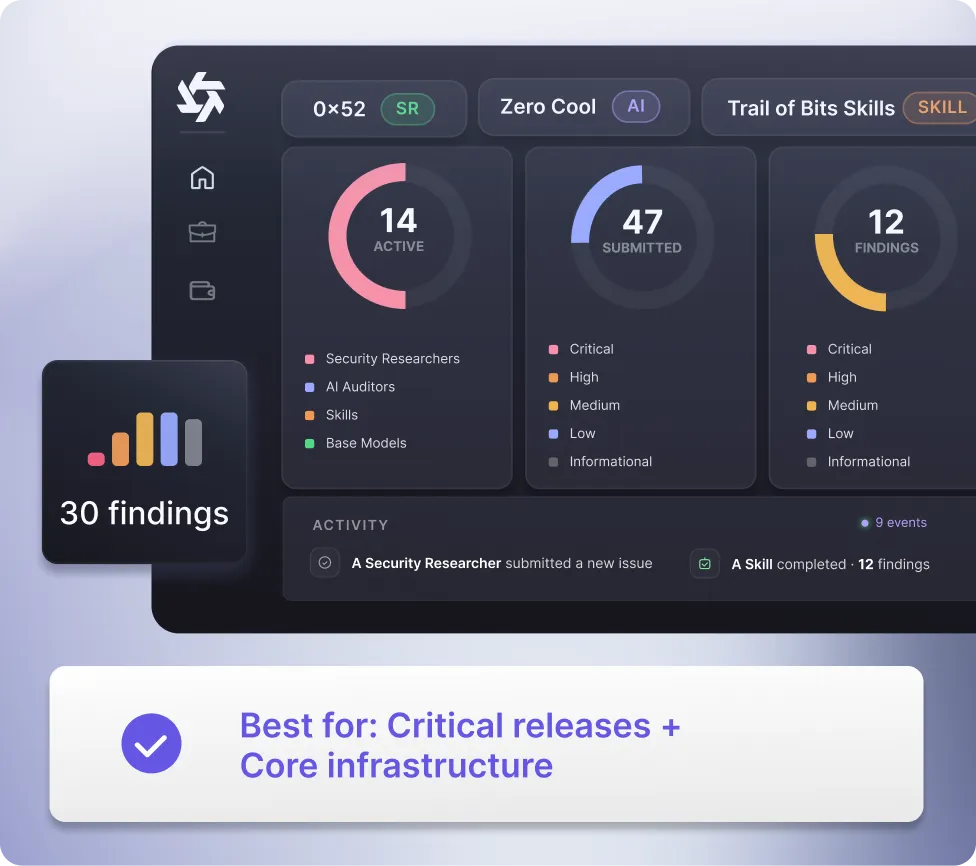
Full-scale AI + human review for critical infrastructure and major protocol releases.

Complete Lifecycle Security:
Development, audit, Post-Launch Protection
Security
Security starts while code is being built, when vulnerabilities are easiest and least costly to fix before they become embedded in the system.
Audit Engine brings AI auditors and security researchers together for a concentrated pressure test before launch, maximizing scrutiny when the code is closest to going live.
Security
Keep live code under continuous scrutiny, with bug bounties and active review maintaining a layer of defense as new risks emerge.
